


Mostrar mensagens com a etiqueta Cinderella Man. Mostrar todas as mensagens
Mostrar mensagens com a etiqueta Cinderella Man. Mostrar todas as mensagens
 "If you grow up in the suburbs of anywhere, a dream like this seems kind of vaguely ludicrous and completely unattainable. But this moment is directly connected to those imaginings. And for anybody who's on the downside of advantage, and relying purely on courage, it's possible."
When Crowe was four years old, his family moved to Australia, where his parents pursued a career in filmset catering. The producer of the Australian TV series Spyforce was his mother's godfather, and Crowe at age five or six was hired for a line of dialogue in one episode, opposite series star Jack Thompson, who years later played Crowe's father in The Sum of Us and who coincidentally had been educated at the same school which Crowe was to attend for two years: Sydney Boys High School.
When he was 14, however, Crowe's family moved back to New Zealand, where he attended Auckland Grammar School with his cousins Martin Crowe and Jeff Crowe. He did not complete secondary school, leaving early to help his family financially. In the mid-1980s Russell, under guidance from his good friend Tom Sharplin, performed as a rock 'n' roll revivalist, under the stage name Russ Le Roq, and had a New Zealand single with "I Wanna Be Marlon Brando."
Crowe returned to Australia at age 21, intending to apply to the National Institute of Dramatic Art. "I was working in a theater show, and talked to a guy who was then the head of technical support at NIDA," Crowe recalled. "I asked him what he thought about me spending three years at NIDA. He told me it'd be a waste of time. He said, 'You already do the things you go there to learn, and you've been doing it for most of your life, so there's nothing to teach you but bad habits.'" In 1987 Crowe spent a six-month stint as a busker when he couldn't find other work.
After appearing in the TV series Neighbours and Living with the Law, Crowe was cast in his first film, The Crossing (1990), a small-town love triangle directed by George Ogilvie. Before production started, a film-student protege of Ogilvie's, Steve Wallace, hired Crowe for the film Blood Oath (1990) (a.k.a. Prisoners of the Sun) which was released a month earlier, although actually filmed later.
In 1992, Crowe starred in the first episode of the second series of Police Rescue. Also in 1992 Crowe starred in Romper Stomper, an Australian film which follows the exploits and downfall of a racist skinhead group in blue-collar suburban Melbourne, directed by Geoffrey Wright.
After initial success in Australia, Crowe began acting in American films. He went on to become a three-time Oscar nominee, winning the Academy Award as Best Actor in 2001 for Gladiator. Crowe wore his grandfather Stan Wemyss's Member of the Order of the British Empire medal to the ceremony.
Crowe received three consecutive best actor Oscar nominations for The Insider, Gladiator and A Beautiful Mind. All three films were also nominated for best picture, and both Gladiator and A Beautiful Mind won the award. Within the six year stretch from 1997-2003, he also starred in two other best picture nominees, L.A. Confidential and Master and Commander: The Far Side of the World, though he was nominated for neither. In 2005 he re-teamed with A Beautiful Mind director Ron Howard for Cinderella Man. In 2006 he re-teamed with Gladiator director Ridley Scott for A Good Year, the first of two consecutive collaborations (the second being American Gangster, due for release in late 2007). While the light romantic comedy of A Good Year was not greatly received, Crowe seemed pleased with the film, telling STV in an interview that he thought it would be enjoyed by fans of his other films.
On March 9, 2005, Crowe revealed to GQ magazine that Federal Bureau of Investigation agents had approached him prior to the 73rd Academy Awards on March 25, 2001 and told him that the Islamist terrorist group al-Qaeda wanted to kidnap him. Crowe told the magazine that it was the first time he had ever heard of al-Qaeda (the September 11 attacks took place later that year) Crowe recalled that "it was something to do with some recording picked up by a French policewoman, I think, in either Libya or Algiers...it was about taking iconographic Americans out of the picture as a sort of cultural-destabilization plan".
Crowe was guarded by Secret Service agents for the next few months, both while shooting films and at award ceremonies (Scotland Yard also guarded Crowe while he was promoting Proof of Life in London in February 2001).
In August 2007 it was announced that Crowe may be approached by the producers of the new Star Trek film due for release in 2008, for the role of the villain.


"Am I really cool? You're telling me I'm cool? Well, that's good to hear."
Giamatti's first high profile role was in the film adaptation of Howard Stern's Private Parts. He played Kenny "Pig Vomit" Rushton, Stern's antagonistic program director at WNBC. Stern praised Giamatti's performance often on his radio program, calling for him to be nominated for the Academy Award for Best Supporting Actor. That didn't happen, but Giamatti's career received a boost. He appeared in a number of supporting roles in big-budget movies such as The Truman Show, Saving Private Ryan, and The Negotiator (all 1998). In 1999 he played Bob Zmuda (and Tony Clifton) in the Andy Kaufman biopic, Man on the Moon. Giamatti continued to appear in major studio releases such as Big Momma's House (2000) and the Planet of the Apes remake (2001), and co-starred in Big Fat Liar (2002). In 2006 he appeared in M. Night Shyamalan's supernatural thriller Lady in the Water, the animated film The Ant Bully, and Neil Burger's drama The Illusionist co-starring Edward Norton. He is also the voice behind the audiobook of the novel A Scanner Darkly by Philip K. Dick, released in the summer of 2006. Most recently it was announced that he will play Santa Claus in the upcoming comedy Fred Claus (which also stars Kevin Spacey and Vince Vaughn), and will co-star alongside Bruce Campbell in Bubba Nosferatu, the prequel to Bubba Ho-tep. Giamatti will also play noted science fiction author Philip K. Dick in the semi-biopic The Owl In Daylight, which he is also producing through his production company, Touchy Feely Productions.
Giamatti's most acclaimed performances were in lead roles in American Splendor (2003) and Sideways (2004). He was nominated for a Golden Globe for the latter (but did not win), but was not nominated for an Oscar in one of the most mystifying and well-publicized snubs in recent Oscar history, made more baffling since Sideways received nominations in several other noteworthy categories. Giamatti received his first Academy Award-nomination for Best Supporting Actor in 2005 for his role in Cinderella Man (a nomination that, while deserved, was generally considered a kind of apology for the snub of the previous year). He was also nominated for a Golden Globe and won the SAG award for Best Supporting Actor for the film. However, he lost both the Golden Globe and the Academy Award to George Clooney in Syriana.
The Brooklyn Academy of Music asked Giamatti, its "2007 BAM Cinema Club Chair", to pick films for an eight-movie series called "Paul Giamatti Selects" and shown at the academy in August and September 2007. His selections indicated a taste for paranoia and "the darkest of dark comedy", according to a writer for The New York Times. Giamatti chose: Frenzy, Dr. Strangelove, Brewster McCloud, The Big Clock, The Seventh Victim, Dawn of the Dead (1978 version), Seconds, and Invasion of the Body Snatchers (1978 version).
Giamatti's first high profile role was in the film adaptation of Howard Stern's Private Parts. He played Kenny "Pig Vomit" Rushton, Stern's antagonistic program director at WNBC. Stern praised Giamatti's performance often on his radio program, calling for him to be nominated for the Academy Award for Best Supporting Actor. That didn't happen, but Giamatti's career received a boost. He appeared in a number of supporting roles in big-budget movies such as The Truman Show, Saving Private Ryan, and The Negotiator (all 1998). In 1999 he played Bob Zmuda (and Tony Clifton) in the Andy Kaufman biopic, Man on the Moon. Giamatti continued to appear in major studio releases such as Big Momma's House (2000) and the Planet of the Apes remake (2001), and co-starred in Big Fat Liar (2002). In 2006 he appeared in M. Night Shyamalan's supernatural thriller Lady in the Water, the animated film The Ant Bully, and Neil Burger's drama The Illusionist co-starring Edward Norton. He is also the voice behind the audiobook of the novel A Scanner Darkly by Philip K. Dick, released in the summer of 2006. Most recently it was announced that he will play Santa Claus in the upcoming comedy Fred Claus (which also stars Kevin Spacey and Vince Vaughn), and will co-star alongside Bruce Campbell in Bubba Nosferatu, the prequel to Bubba Ho-tep. Giamatti will also play noted science fiction author Philip K. Dick in the semi-biopic The Owl In Daylight, which he is also producing through his production company, Touchy Feely Productions.
Giamatti's most acclaimed performances were in lead roles in American Splendor (2003) and Sideways (2004). He was nominated for a Golden Globe for the latter (but did not win), but was not nominated for an Oscar in one of the most mystifying and well-publicized snubs in recent Oscar history, made more baffling since Sideways received nominations in several other noteworthy categories. Giamatti received his first Academy Award-nomination for Best Supporting Actor in 2005 for his role in Cinderella Man (a nomination that, while deserved, was generally considered a kind of apology for the snub of the previous year). He was also nominated for a Golden Globe and won the SAG award for Best Supporting Actor for the film. However, he lost both the Golden Globe and the Academy Award to George Clooney in Syriana.
The Brooklyn Academy of Music asked Giamatti, its "2007 BAM Cinema Club Chair", to pick films for an eight-movie series called "Paul Giamatti Selects" and shown at the academy in August and September 2007. His selections indicated a taste for paranoia and "the darkest of dark comedy", according to a writer for The New York Times. Giamatti chose: Frenzy, Dr. Strangelove, Brewster McCloud, The Big Clock, The Seventh Victim, Dawn of the Dead (1978 version), Seconds, and Invasion of the Body Snatchers (1978 version).
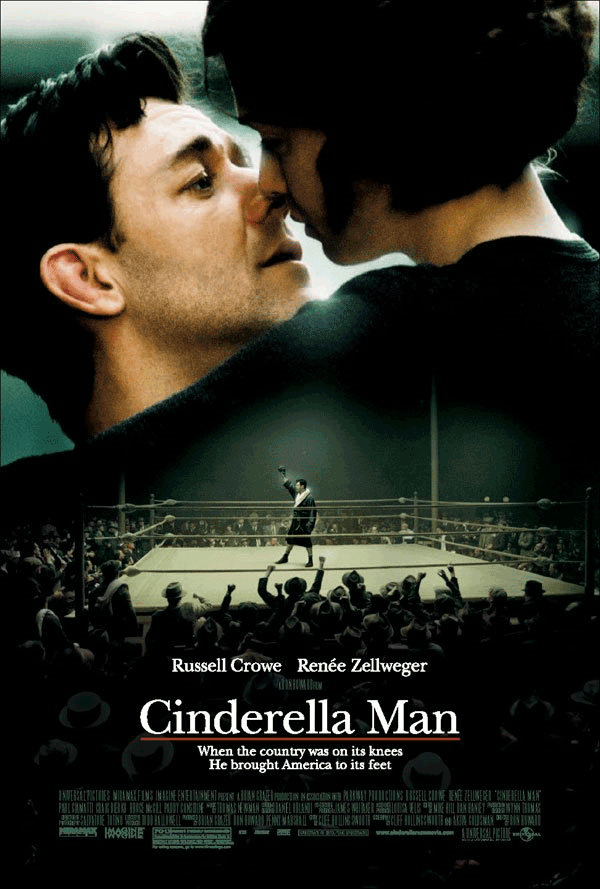
“You think you're telling me something? Like, what, boxing is dangerous, something like that? You don't think working triple shifts and at night on a scaffold isn't just as likely to get a man killed? What about all those guys who died last week living in cardboard shacks to save on rent money just to feed their family, 'cause guys like you have not quite figured out a way yet to make money off of watching that guy die? But in my profession, and it is my profession, I'm a little more fortunate.”
"Cinderella Man" deserves to be placed alongside other great biographical films dealing with the lives and times of great boxers. Such films include "Raging Bull," "The Joe Louis Story," "Ali," "The Hurricane," and "Ring of Fire: The Emile Griffith Story."
These films share in common not just a documentary-like approach to boxing or a superficial biopic. They also portray the human side of a modern gladiator and the culture that produced him. In the case of "Cinderella Man," we are given a detailed and heart-rending portrait of the Great Depression in American. The story of the gentleman pugilist James J. Braddock is the backdrop to the larger drama of Americans' struggle in the 1930s.
Russell Crowe provides a brilliant interpretation of Braddock, capturing the decency of a man whose career as a boxer would appear to have peaked at just the wrong time prior to the Crash of 1929. After that momentous event, Braddock's boxing went into decline just like the lives of millions of Americans. The scenes of Braddock and his family living in squalid conditions and with uncertainty about such basics as heat and electricity were carefully developed in the film. Renée Zellweger was outstanding as Mae, the caring but feisty wife of Braddock. Paul Giamatti was also excellent as Braddock's handler-manager, Joe Gould. Joe tries to keep up appearances by sporting fancy clothes. But in one revealing scene in the film when we see the interior of Joe's ostensibly swanky apartment, there is no fancy furniture other than a dowdy table and some flimsy deck chairs. Everyone is reeling from the Depression. In the depiction of the massive unemployment, the "Hoovervilles" of the homeless residing in Central Park, and the desperate need for Americans for an optimistic icon like Braddock to raise their spirits, the film truly captured the tragedy of the Great American Depression.
The film's director Ron Howard emphasized close-ups throughout the film with uneven results. In many of the boxing sequences, the close-ups and rapid editing made it difficult tell the fighters apart. The close-ups continued even into the domestic scenes and the outdoor sequences depicting Braddock working as a longshoreman. The film's dark cinematography conveyed the bleakness of the Depression years, but it worked against bringing out the buoyant spirit of Braddock himself and the optimism that he instilled in others.
Indeed, the characters and the story were the strong points of "Cinderella Man." Much credit should go to Cliff Hollingsworth for a screenplay that included thoughtful dialogue, humor, and multi-dimensional characters. Daniel Orlandi also merits praise for the brilliant costumes that helped to recreate the period of the early 1930s.
"Cinderella Man" deserves to be placed alongside other great biographical films dealing with the lives and times of great boxers. Such films include "Raging Bull," "The Joe Louis Story," "Ali," "The Hurricane," and "Ring of Fire: The Emile Griffith Story."
These films share in common not just a documentary-like approach to boxing or a superficial biopic. They also portray the human side of a modern gladiator and the culture that produced him. In the case of "Cinderella Man," we are given a detailed and heart-rending portrait of the Great Depression in American. The story of the gentleman pugilist James J. Braddock is the backdrop to the larger drama of Americans' struggle in the 1930s.
Russell Crowe provides a brilliant interpretation of Braddock, capturing the decency of a man whose career as a boxer would appear to have peaked at just the wrong time prior to the Crash of 1929. After that momentous event, Braddock's boxing went into decline just like the lives of millions of Americans. The scenes of Braddock and his family living in squalid conditions and with uncertainty about such basics as heat and electricity were carefully developed in the film. Renée Zellweger was outstanding as Mae, the caring but feisty wife of Braddock. Paul Giamatti was also excellent as Braddock's handler-manager, Joe Gould. Joe tries to keep up appearances by sporting fancy clothes. But in one revealing scene in the film when we see the interior of Joe's ostensibly swanky apartment, there is no fancy furniture other than a dowdy table and some flimsy deck chairs. Everyone is reeling from the Depression. In the depiction of the massive unemployment, the "Hoovervilles" of the homeless residing in Central Park, and the desperate need for Americans for an optimistic icon like Braddock to raise their spirits, the film truly captured the tragedy of the Great American Depression.
The film's director Ron Howard emphasized close-ups throughout the film with uneven results. In many of the boxing sequences, the close-ups and rapid editing made it difficult tell the fighters apart. The close-ups continued even into the domestic scenes and the outdoor sequences depicting Braddock working as a longshoreman. The film's dark cinematography conveyed the bleakness of the Depression years, but it worked against bringing out the buoyant spirit of Braddock himself and the optimism that he instilled in others.
Indeed, the characters and the story were the strong points of "Cinderella Man." Much credit should go to Cliff Hollingsworth for a screenplay that included thoughtful dialogue, humor, and multi-dimensional characters. Daniel Orlandi also merits praise for the brilliant costumes that helped to recreate the period of the early 1930s.
But the heart of this film experience is Russell Crowe's screen portrayal of Braddock. It was the colorful sportswriter and raconteur Damon Runyan who coined the nickname of "Cinderella Man" for Braddock. However, the real James J. Braddock was more than lucky. It was his strength of character in and out of the ring that captivated America. One of the most moving scenes of the film was a heated argument between Braddock and his wife Mae where Braddock insists that even in the most difficult of times, he would refuse to be separated from his children. As a boxer, he was fearless. But he demonstrated even more courage in fighting for family values—a lesson from which we can learn a great deal today in reflecting on this sensitive film. 9/10
Mensagens antigas Página inicial
Subscribe to:
Mensagens (Atom)