


Mostrar mensagens com a etiqueta Hannah and Her Sisters. Mostrar todas as mensagens
Mostrar mensagens com a etiqueta Hannah and Her Sisters. Mostrar todas as mensagens
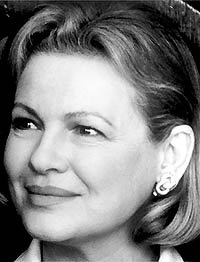 "My first meeting with Woody Allen lasted 30 seconds. He looked at me, said hello, asked someone to take a Polaroid, thanked me very much and I was shown the door. When I came out, the woman due after me was still doing the same thing as when I went in. She was shocked - 'What happened?' But that's how it is. My agent had warned me. Not hers. She was stunned."
Wiest was born in Kansas City, Missouri to a father who was a college dean and former psychiatric social worker for the U.S. Army, and a mother who worked as a nurse. Wiest's original ambition was to be a ballerina, but in late high school she switched her sights to acting in theatre. She made her film debut in 1980, but did not make a name for herself as a film actress until teaming up with Woody Allen during the 1980s.
Wiest's early career was in theatre. She studied theatre at the University of Maryland but left after her third term, in order to tour with a Shakespeare troupe. She worked at the Long Wharf theatre, understudied off-Broadway in Kurt Vonnegut's "Happy Birthday, Wanda June." And then made her Broadway debut in Robert Anderson's "Solitaire/Double Solitaire," taking over in the role of the daughter. She then went to work at Arena Stage in Washington, D.C., and became one of their most prized leading actresses, appearing in many plays including a memorable Emily in "Our Town," Honey in "Who's Afraid of Virginia Woolf," and leading roles in "The Dybbuk," "The Lower Depths," and "Heartbreak House." She also toured the USSR with the Arena Stage Company.
In 1976, Wiest went to the Eugene O'Neill National Playwrights Conference and played leading roles in Amlin Gray's "Pirates" and Christopher Durang's "A History of the American Film." Shortly after that, she left Arena Stage, and performed more in New York City. At Joe Papp's Public Theatre she took over the lead in "Ashes," and played Cassandra in "Agamemnon," directed by Andrei Şerban. She was in two plays by Tina Howe, "Museum" and then "The Art of Dining." In the latter play Wiest was deeply hilarious as the shy and awkward authoress Elizabeth Barrow Colt, and she won every off-Broadway theatre award for her performance: an Obie Award, a Theatre World Award, and the Clarence Derwent Award, given yearly for the most promising performance in New York theatre. In early 1980, she appeared on Broadway in Frankenstein, directed by Tom Moore, portrayed Desdemona in Othello opposite James Earl Jones and Christopher Plummer, and co-starred with John Lithgow in Christopher Durang's romantic screwball comedy Beyond Therapy, directed by John Madden. Also in the 80s she was acclaimed for her performances in Hedda Gabbler, directed by Lloyd Richards at Yale Repertory Theatre, and in Harold Pinter's A Kind of Alaska, Janusz Glowacki's Hunting Cockroaches, and Lanford Wilson's Serenading Louie.
Once her film career took off with her work in Woody Allen's films, Wiest was available to the stage less frequently, though she performed in the 1990s in "In the Summer House," "Square One," Cynthia Ozick's "The Shawl," and Naomi Wallace's "One Flea Spare." In 2003 she acted on Broadway with Al Pacino and Marisa Tomei in Oscar Wilde's "Salome." And in 2005 she starred in Kathleen Tolan's "Memory House," and then at Lincoln Center in the late Wendy Wasserstein's final play "Third," directed by Daniel Sullivan.
Under Allen's direction, Wiest won an Academy Award for Best Supporting Actress, in Hannah and Her Sisters (1986). She followed her Academy Award success with performances in The Lost Boys (1987) and Bright Lights, Big City (1988) before starring with Steve Martin, Mary Steenburgen, Jason Robards, Keanu Reeves and Martha Plimpton in Ron Howard's Parenthood, for which she received her second Oscar nomination.
In 1990, Wiest starred in Edward Scissorhands. She returned to Woody Allen in 1994 for Bullets Over Broadway, a comedy set in 1920s New York City, winning her second Best Supporting Actress Oscar for her portrayal of Helen Sinclair, a boozy, glamorous, and neurotic star of the stage. She appeared in the film Practical Magic (1998) and the television mini-series The 10th Kingdom (2000). From 2000 to 2002, Wiest portrayed Nora Lewin in the long-running NBC crime drama Law & Order.
 “I'm not afraid of dying . . . I just don't want to be there when it happens.”
To raise money he began writing gags for the agent David O. Alber, who sold them to newspaper columnists. According to Allen, his first published joke "was in a gossip column. It read: 'Woody Allen says he ate at a restaurant that had O.P.S. prices - over people's salaries.'"
At sixteen, he started writing for stars like Sid Caesar and began calling himself Woody Allen, which would remain his moniker (although it's unclear if Allen ever legally adopted the stage name). He was a gifted comedian from an early age and would later joke that when he was young he was often sent to inter-faith summer camps, where he "was savagely beaten by children of all races and creeds".
After high school, he went to New York University where he studied communication and film, but, never committed as a student, he was thrown off his course due to lack of punctuality and commitment. He later briefly attended City College of New York.
After his false starts at NYU and City College, he became a full-time writer for Herb Shriner, earning $75/week at first. At age 19, he started writing scripts for The Ed Sullivan Show, The Tonight Show, Caesar's Hour and other television shows. By the time he was working for Sid Caesar, he was making $1500/week; with Caesar he worked alongside Danny Simon, whom Allen credits for helping him to structure his writing style.
In 1961, he started a new career as a stand-up comedian, debuting in a Greenwich Village club called the Duplex. He contributed sketches to the Broadway revue From A to Z, and began writing for the popular Candid Camera television show, even appearing in some episodes. Together with his managers, Allen turned his weaknesses into his strengths, developing his neurotic, nervous, and intellectual persona. He quickly became a successful comedian, and appeared frequently in nightclubs and on television. Allen was popular enough to appear on the cover of Life in 1969 when Play It Again, Sam opened on Broadway.
Allen started writing short stories for magazines (most notably The New Yorker) as well as plays, the best known of which are the Broadway productions Don't Drink the Water (1966) and Play It Again, Sam (1969).
His first movie production was What's New, Pussycat? in 1965, for which he wrote the initial screenplay. He was hired by Warren Beatty to re-write a script, and to appear in a small part. Over the course of the re-write, Beatty's part grew smaller and Allen's grew larger. Beatty was upset and quit the production. Peter O'Toole was hired for the Beatty role, and Peter Sellers was brought in as well; Sellers was a big enough star to demand many of Woody Allen's best lines/scenes, prompting hasty re-writes. This experience with meddling producers, egotistical stars, and directors ruining jokes, along with a similar experience on the James Bond spoof Casino Royale (for which he did uncredited rewrites of his own scenes), led Allen to decide that the only way filmmaking was worthwhile was if he was in control of the film.
Allen's first directorial effort was What's Up, Tiger Lily? (1966), in which an existing Japanese spy movie was redubbed in English by Allen and his friends with completely new, comic dialogue.
His first conventional effort was Take the Money and Run (1969), which was followed by Bananas, Everything You Always Wanted To Know About Sex (But Were Afraid to Ask), Sleeper, and Love and Death.
In 1972, he also starred in the film version of Play It Again, Sam, which was directed by Herbert Ross. All of Allen's early films were pure comedies that relied heavily on slapstick, inventive sight gags, and non-stop one-liners. Among the many notable influences on these films are Bob Hope, Groucho Marx (as well as, to some extent, Harpo Marx) and Humphrey Bogart. In 1976, he starred in, but did not direct, The Front, a humorous and poignant account of Hollywood blacklisting during the 1950s.
Annie Hall marked a major turn to more sophisticated humor and thoughtful drama. Allen's 1977 film won four Academy Awards, including Best Picture - an unusual feat for a comedy. Annie Hall set the standard for modern romantic comedy, and also started a minor fashion trend with the unique clothes worn by Diane Keaton in the film (the offbeat, masculine clothing, such as ties with cardigans, was actually Keaton's own).
While in production, its working title was "Anhedonia," a term that means the inability to feel pleasure, and its plot revolved around a murder mystery. Apparently, as filmed, the murder mystery plot didn't work (and was later used in his 1993 Manhattan Murder Mystery), so Allen re-edited and re-cut the movie after production ended to focus on the romantic comedy between Allen's character, Alvy Singer, and Keaton's character, Annie Hall. The new version, retitled Annie Hall (named after Keaton's grandmother), still deals with the theme of the inability to feel pleasure. Ranked at No. 35 on the American Film Institute' s "100 Best Movies" and at No. 4 on the AFI list of "100 Best Comedies," Annie Hall is considered to be among Allen's best.
Manhattan, released in 1979, is a black-and-white film that can be viewed as an homage to New York City, which has been described as the true "main character" of the movie. As in many other Allen films, the main characters are upper-class academics, literati, and occasional twits. Even though it makes fun of pretentious intellectuals, the story is packed with obscure references that makes it less accessible to a general audience. The love-hate opinion of cerebral persons found in Manhattan is characteristic of many of Allen's movies including Crimes and Misdemeanors and Annie Hall. Manhattan focuses on the complicated relationship between a middle-aged Isaac Davis (Allen) and a seventeen-year-old Tracy (Mariel Hemingway) - which presages Allen's complicated personal relationship with under-aged Soon-Yi Previn.
Between Annie Hall and Manhattan Allen wrote and directed the gloomy drama Interiors (1978), in the style of the late Swedish director Ingmar Bergman, one of Allen's major influences. Interiors is considered by critics as a significant breakthrough past Allen's "earlier, funnier comedies" (a line from 1980s Stardust Memories).
Allen's 1980s films, even the comedies, have somber and philosophical undertones. Some, like September and Stardust Memories, are often said to be heavily influenced by the works of European directors, most notably Ingmar Bergman and Federico Fellini.
Stardust Memories features a main character, a successful filmmaker played by Allen, who expresses resentment and scorn for his fans. Overcome by the recent death of a friend from illness, the character states, "I don't want to make funny movies any more", and a running gag throughout the film has various people (including a group of visiting space aliens) telling Bates that they appreciate his work, "especially the early, funny ones".
However, by the mid-1980s, Allen had begun to combine tragic and comic elements with the release of such films as Hannah and Her Sisters (winner of three Academy Awards) starring British actor Michael Caine, and Crimes and Misdemeanors, in which he tells two different stories that connect at the end. He also produced a vividly idiosyncratic tragi-comical parody of documentary, titled Zelig.
He also made three films about show business. The first movie is Broadway Danny Rose, in which he plays a New York manager; then, The Purple Rose of Cairo, a movie that shows the importance of the cinema during the Depression though the character of the naive Cecilia. Lastly, Allen made Radio Days, which is a film about his childhood in Brooklyn, and the importance of the radio. Purple Rose was named by Time Magazine as one of the 100 best films of all time, and Allen has described it as one of his three best films, along with Stardust Memories and Match Point (It is worth noting that Allen defines them as "best" not in terms of quality, but because they came out the closest to his original vision).
Before the end of the eighties he made other movies that were strongly inspired by Ingmar Bergman's films. September is a remake of Autumn Sonata, and Allen uses many elements from Persona in Another Woman.
His 1992 film Shadows and Fog (1992) is a black and white homage to German expressionists and features the music of Kurt Weill. He then made his critically acclaimed drama Husbands and Wives (1992) which received two oscar nominations; Best Supporting Actress for Judy Davis and Best Original Screenplay for Allen. His film Manhattan Murder Mystery (1993) combined suspense with dark comedy, and starred Diane Keaton, Alan Alda and Anjelica Huston.
In the late 1990s he returned to lighter movies, such as Bullets Over Broadway (1994), which earned him an Academy Award nomination for Best Director. The musical Everyone Says I Love You (1996) was Allen's first (and, to this point, only) musical.
The singing and dancing scenes in Everyone Says I Love You are similar to the musical starring Fred Astaire and Ginger Rogers, but the plot is comical. The comedy Mighty Aphrodite (1995), in which the Greek and Roman tragedies play a large role, won an Academy Award for Mira Sorvino. Allen's 1999 jazz mockumentary Sweet and Lowdown was also nominated for two Academy Awards for Sean Penn (Best Actor) and Samantha Morton (Best Supporting Actress). In contrast to these lighter movies, Allen veered scathingly dark and satirical towards the end of the 1990s with Deconstructing Harry (1997) and Celebrity (1998). Allen made his only sitcom "appearance" via telephone in the 1997 episode, "My Dinner with Woody" of the show Just Shoot Me!, an episode paying tribute to several of his films.
Small Time Crooks (2000) was his first film with DreamWorks SKG studio and represented a change in direction: Allen began giving more interviews and made an apparent return to his strictly comedy roots. Small Time Crooks was a relative success, grossing over $17 million domestically, but Allen's next 4 films foundered at the box office, including Allen's most expensive film to date, The Curse of the Jade Scorpion (with a budget of $33 million). Hollywood Ending, Anything Else, and Melinda and Melinda were given "rotten" ratings from film-review website Rotten Tomatoes and each earned less than $5 million domestically. Most critics agreed that Allen's films since 1999's Sweet and Lowdown were subpar, and some critics expressed concern that Allen's best years were now behind him.
Match Point (2005) was one of Allen's most successful films in the past ten years and generally received very positive reviews. Set in London, it starred Jonathan Rhys-Meyers and Scarlett Johansson. It is also markedly darker than Allen's first four films under the DreamWorks SKG banner. Match Point earned more than $23 million domestically (more than any of his films in nearly 20 years) and earned over $62 million in international box office. Match Point earned Allen his first Academy Award nomination since 1998 for Best Writing, Original Screenplay and directing and writing nominations at the Golden Globes, his first Globe nominations since 1987. In an interview with Premiere Magazine, Allen stated this was the best film he has ever made.
Allen returned to London to film Scoop, which also starred Johansson, as well as Hugh Jackman, Ian McShane, Kevin McNally. The film was released on July 28, 2006, and received mixed reviews. He has also filmed Cassandra's Dream in London. Cassandra's Dream stars Colin Farrell, Ewan McGregor, and Tom Wilkinson and is expected to be released in November 2007.
After finishing his third London film, Allen headed to Spain. He reached an agreement to film his current project in Barcelona, where shooting started on July 9th 2007. The movie will star international and Spanish actors and actresses, including Scarlett Johansson, Javier Bardem, Patricia Clarkson, and Penélope Cruz.
Allen has said that he "survives" on the European market. Audiences there have tended to be more receptive to Allen's films, particularly France, a country where he has a large fan base (something joked about in Hollywood Ending). "In the United States things have changed a lot, and it's hard to make good small films now," Allen said in a 2004 interview. "The avaricious studios couldn't care less about good films - if they get a good film they're twice as happy, but money-making films are their goal. They only want these $100 million pictures that make $500 million". It has been rumoured he will write/direct a segment for the upcoming film New York, I Love You.
 “Be like a duck, my mother used to tell me. Remain calm on the surface and paddle like hell underneath."
When Caine first became an actor, he adopted the stage name "Michael Scott". His agent soon informed him, however, that another actor was already using the same name, and that he had to come up with a new name immediately. Speaking to his agent from a telephone box in Leicester Square in London, Caine looked around for inspiration, noted that The Caine Mutiny was being shown at the Odeon Cinema, and decided to change his name to "Michael Caine". He once joked to an interviewer that had he looked the other way, he would have ended up as "Michael One Hundred and One Dalmatians".
Caine's acting career began in Horsham, West Sussex. He responded to an advertisement for an assistant stage manager for the Horsham-based Westminster Repertory Company. This led to walk-on roles at the Carfax Theatre. After several minor roles, Caine came into the public eye as an upper-class British army officer in the 1964 film Zulu. This proved paradoxical, as Caine was to become notable for using a regional accent, rather than the received pronunciation hitherto considered proper for film actors. At the time, Caine's working-class cockney, just as with The Beatles' Liverpudlian accents, stood out to American and British audiences alike. Zulu was closely followed by two of his best-known roles: the spy Harry Palmer in The Ipcress File (1965), and the woman-chasing title character in Alfie (1966). He went on to play Palmer in a further two films, Funeral in Berlin (1966) and Billion-Dollar Brain (1967). Caine made his first movie in the United States in 1966, after an invitation from Shirley MacLaine to play opposite her in Gambit. During the first two weeks, whilst staying at the Beverly Hills Hotel, he met long term friends John Wayne and agent "Swifty" Lazar.
After ending the 1960s with the equally iconic The Italian Job, with Noel Coward, and a solid role as an RAF fighter pilot, Squadron Leader Canfield, in the all-star cast of Battle of Britain (1969), Caine entered the 1970s with Get Carter, a British gangster film. Caine was busy throughout the 1970s, with successes including Sleuth (1972), opposite Sir Laurence Olivier and The Man Who Would Be King (1975), costarring Sir Sean Connery. By the end of the decade, he had moved to the U.S., but his choice of roles was beginning to be criticised. Caine was averaging two films a year, but these included such failures as The Swarm (1978), Beyond the Poseidon Adventure (1979), The Island (1980) and The Hand (1981). Although Caine also took better roles, including a BAFTA-winning turn in Educating Rita (1983) and an Oscar-winning one in Hannah and Her Sisters (1986), he continued to appear in notorious duds like Jaws: The Revenge (1987) and Bullseye! (1990). Of the former, Caine famously said "I have never seen the film, but by all accounts it was terrible. However I have seen the house that it built, and it is terrific".
The 1990s were a lean time for Caine as he found good parts harder to come by. His early '90s output included a villain in the Steven Seagal flop On Deadly Ground (1994), two straight to video Harry Palmer sequels and a few television movies. However, Caine's reputation as a pop icon was still intact, thanks to his roles in films such as The Italian Job and Get Carter. His performance in 1998's Little Voice was seen as something of a return to form, and won him a Golden Globe Award. Better parts followed, including The Cider House Rules (1999), for which he won his second Oscar, Last Orders (2001), The Quiet American (2002) and others which helped rehabilitate his reputation. Several of Caine's classic films have been remade to appeal to new, younger audiences, including The Italian Job, Get Carter, and Alfie. In 2005, he was cast as Bruce Wayne's butler Alfred in the Batman film series. In 2006, he appeared in the films Children of Men and The Prestige.
Caine has been Oscar-nominated six times, winning his first Academy Award for the 1986 film Hannah and Her Sisters, and his second in 1999 for The Cider House Rules, in both cases as a supporting actor. He was appointed Commander of the Order of the British Empire (CBE) in 1993 for services to drama, and in 2000 he was knighted, becoming Sir Maurice Micklewhite. Unlike many actors who adopt their stage name for everyday use, Caine still uses his real name when he is not working.
Caine is a popular subject for impressionists and mimics, having a voice and manner of speaking that are distinctive, yet fairly easy to imitate. Most Caine impressions include the catchphrase "Not a lot of people know that”. In 1983, the remark really caught on, when Caine was given the line to say as an in-joke in the film Educating Rita. In 1984, he also put the name Not A Lot Of People Know That! to a book of trivial facts for charity.
Caine is one of only two actors to be nominated for an Academy Award for acting (either lead or supporting) in every decade since the 1960s. The other is Jack Nicholson.

“A week ago I bought a rifle, I went to the store - I bought a rifle! I was gonna, you know, if they told me I had a tumor, I was gonna kill myself. The only thing that might-ve stopped me - MIGHT'VE - is that my parents would be devastated. I would have to shoot them also, first. And then I have an aunt and uncle - you know - it would've been a blood bath.”
In "Hannah and her Sisters," Woody Allen has created a funny, poignant, and sweet film about three very different sisters. The focus is Hannah (Mia Farrow), a successful actress currently married to Elliot (Michael Caine) and divorced from Mickey (Woody Allen). She's more of a mother figure to her sisters, Holly and Lee (Dianne Wiest and Barbara Hershey) than their own mother (Farrow's real-life mother, Maureen O'Sullivan) an alcoholic performer who likes to flirt with younger men, to the fury of her husband. Hannah handles her mother, puts up with Holly constantly borrowing money and then picking fights with her in that mother/daughter fashion, but she doesn't know that her sister Lee is having an affair with Elliot. And so it goes, as Thanksgivings pass and the women attempt to straighten out their lives.
The film is not so much a comedy as it is a drama. The comedy that's in it fits, and is good: the humorous parts of the films are provided by Wiest and Allen, and some of the lines and situations are hilarious: Holly and Mickey's disastrous date ("I had a great time. It was just like the Nurenberg trials"), Mickey's contemplation of suicide, and Mickey's fear of a brain tumor. Allen is brilliant as a man who believes he's living in a godless world but wants to believe. Though Jewish, he decides to become Catholic, bringing home religious info with his mayonnaise and Wonder Bread; when that doesn't work out, he talks to the Hari Krishna in the park. Wiest is as adorable as she is fantastic as a manic-depressive who goes from acting (including auditioning for a musical when she can't sing), catering (until her partner, played by Carrie Fisher, steals the man she thinks is her boyfriend), and finally writing.
The rest of the cast is magnificent and tackle some of the more serious moments of the movie: Michael Caine as Hannah's husband, looking for love in all the wrong places; Max von Sydow, Lee's tortured artist boyfriend; and Lloyd Nolan and Maureen O'Sullivan as the sisters' parents, in an imperfect marriage filled with love, booze, and jealousy. Hershey is lovely as a confused woman who adores her sister but looks to Caine for a way out of her relationship with a controlling boyfriend.
Like most of Woody Allen's films, it is very well-made. His movies always have a simplistic, deadpan use of the camera that works quite well, a lot of the time keeping the camera stationary in the hallway as the characters leave and go from room to room, passing the camera by as it sits, almost as if it were the point of view of the house itself watching its residents go through life. In Hannah and Her Sisters, there are a few great moments where the camera is used to great and unpredicted comical effect. He also uses music very well in this film. The constant, old-fashioned, eclectic soundtrack plays in nearly every scene and when one scene jumps to another, the changing music will contradict the last piece of music from the previous scene.
It has it all; it's hysterically funny at times (the hypochodriac), it's incredibly painful (afternoons) at others and the blending of the characters paths (“Lucky I ran into you”) is just beautiful… 10/10
In "Hannah and her Sisters," Woody Allen has created a funny, poignant, and sweet film about three very different sisters. The focus is Hannah (Mia Farrow), a successful actress currently married to Elliot (Michael Caine) and divorced from Mickey (Woody Allen). She's more of a mother figure to her sisters, Holly and Lee (Dianne Wiest and Barbara Hershey) than their own mother (Farrow's real-life mother, Maureen O'Sullivan) an alcoholic performer who likes to flirt with younger men, to the fury of her husband. Hannah handles her mother, puts up with Holly constantly borrowing money and then picking fights with her in that mother/daughter fashion, but she doesn't know that her sister Lee is having an affair with Elliot. And so it goes, as Thanksgivings pass and the women attempt to straighten out their lives.
The film is not so much a comedy as it is a drama. The comedy that's in it fits, and is good: the humorous parts of the films are provided by Wiest and Allen, and some of the lines and situations are hilarious: Holly and Mickey's disastrous date ("I had a great time. It was just like the Nurenberg trials"), Mickey's contemplation of suicide, and Mickey's fear of a brain tumor. Allen is brilliant as a man who believes he's living in a godless world but wants to believe. Though Jewish, he decides to become Catholic, bringing home religious info with his mayonnaise and Wonder Bread; when that doesn't work out, he talks to the Hari Krishna in the park. Wiest is as adorable as she is fantastic as a manic-depressive who goes from acting (including auditioning for a musical when she can't sing), catering (until her partner, played by Carrie Fisher, steals the man she thinks is her boyfriend), and finally writing.
The rest of the cast is magnificent and tackle some of the more serious moments of the movie: Michael Caine as Hannah's husband, looking for love in all the wrong places; Max von Sydow, Lee's tortured artist boyfriend; and Lloyd Nolan and Maureen O'Sullivan as the sisters' parents, in an imperfect marriage filled with love, booze, and jealousy. Hershey is lovely as a confused woman who adores her sister but looks to Caine for a way out of her relationship with a controlling boyfriend.
Like most of Woody Allen's films, it is very well-made. His movies always have a simplistic, deadpan use of the camera that works quite well, a lot of the time keeping the camera stationary in the hallway as the characters leave and go from room to room, passing the camera by as it sits, almost as if it were the point of view of the house itself watching its residents go through life. In Hannah and Her Sisters, there are a few great moments where the camera is used to great and unpredicted comical effect. He also uses music very well in this film. The constant, old-fashioned, eclectic soundtrack plays in nearly every scene and when one scene jumps to another, the changing music will contradict the last piece of music from the previous scene.
It has it all; it's hysterically funny at times (the hypochodriac), it's incredibly painful (afternoons) at others and the blending of the characters paths (“Lucky I ran into you”) is just beautiful… 10/10
Mensagens antigas Página inicial
Subscribe to:
Mensagens (Atom)